

Bridging Midtown and Downtown, with Noah Berghammer
Why nobody buys culture, the scene has collapsed, and we're starved for patronage


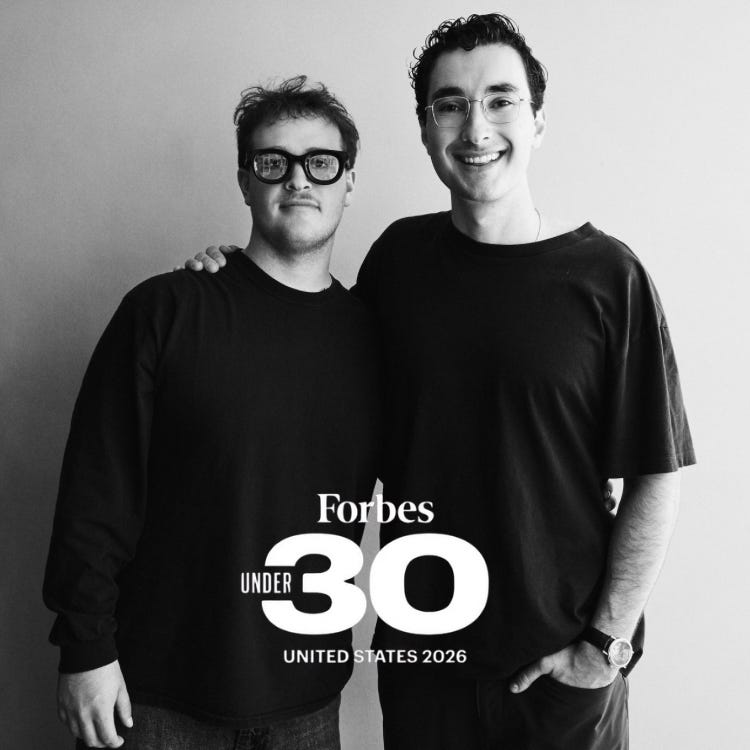
Our friend Noah is a Forbes 30u30 awardee and co-founder of PRIV.Y, a creative production studio and media company. He and his partners Lane Kimbro, Nick Brady, and Ellie Borzilleri have earned work with Dior, Valentino, Prada, Rosewood Hotels, and Vogue. Noah would’ve likely found himself a regular at Warhol’s Factory in the 70s and Tribeca’s once famous Mudd Club in the 80s. Est. 2024, he’s run a gallery space on Hester street in the Lower East Side, using PRIV.Y’s production arm to fund it. It’s a space designed and programmed to re-build bonds between midtown and downtown Manhattan.
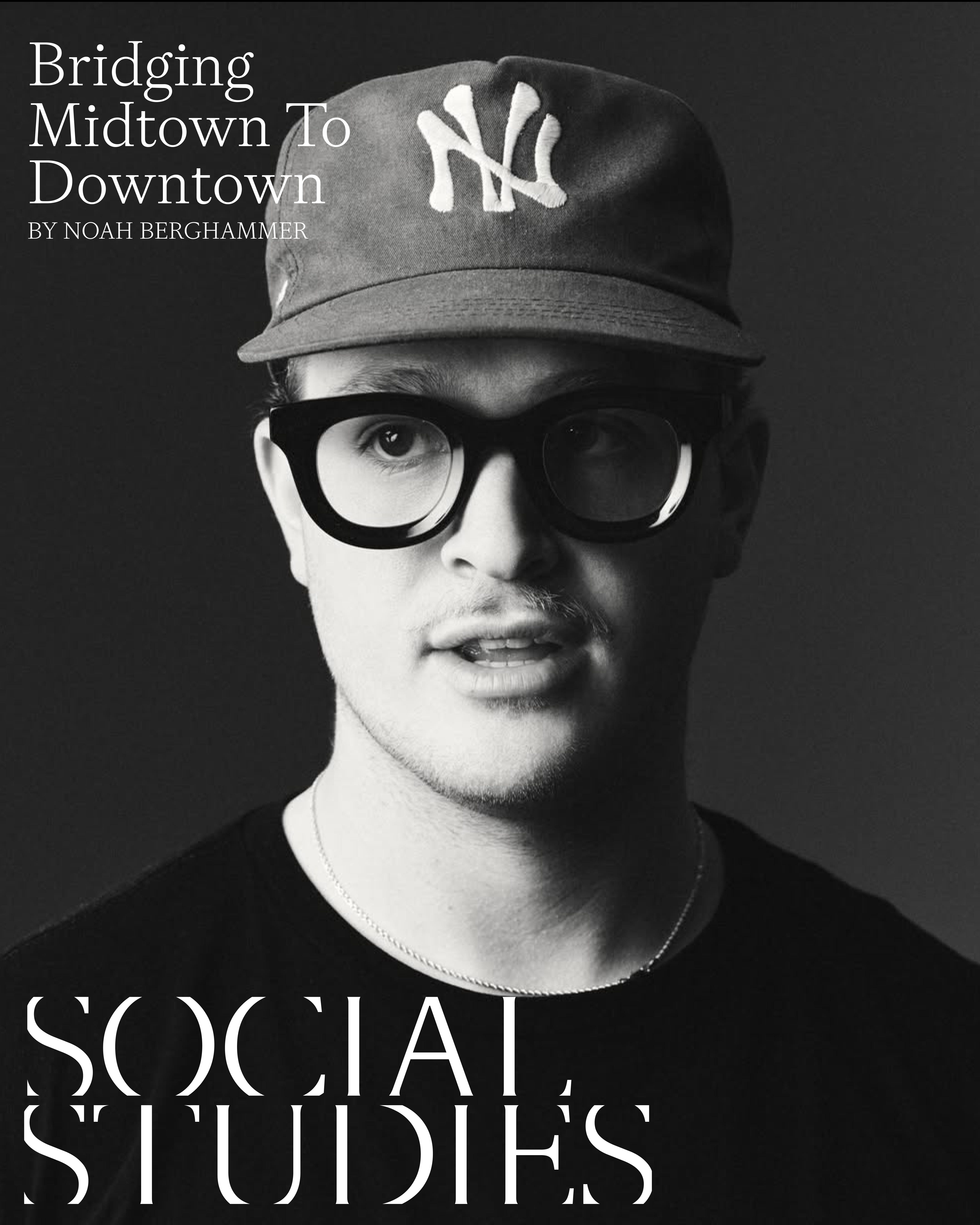
This is Social Studies. Where Creative technologists, new media’s moguls, underground musicians, established photographers, patrons of the arts (and others) contribute to what we hope will grow into an archive of the times. We believe written media is a portal to the soul, for both the reader and the writer. Expect deep convictions, personal manifestos, industry critiques and worldview fascinations and romanticizations. Without further ado,
Here’s Minnesota’s own, Noah Berghammer
When I moved to New York four years ago, everyone told me the city was dead. I was 22, from the Midwest, and didn’t believe them. I still don’t. I moved here the way you move somewhere when it’s been calling so loud that you can’t hear anything else; I had no job, no lease, no real connections, just a vigor and a faith in God that it would all work out. And mostly, it has. But something is a bit broken here. I spent time searching for the solution. Now I’m steadily building it.
That act of collecting, of patronizing, of putting real money behind something uncertain and alive and not yet validated by an auction house or an algorithm is the only way artists will be able to survive in a city like this.
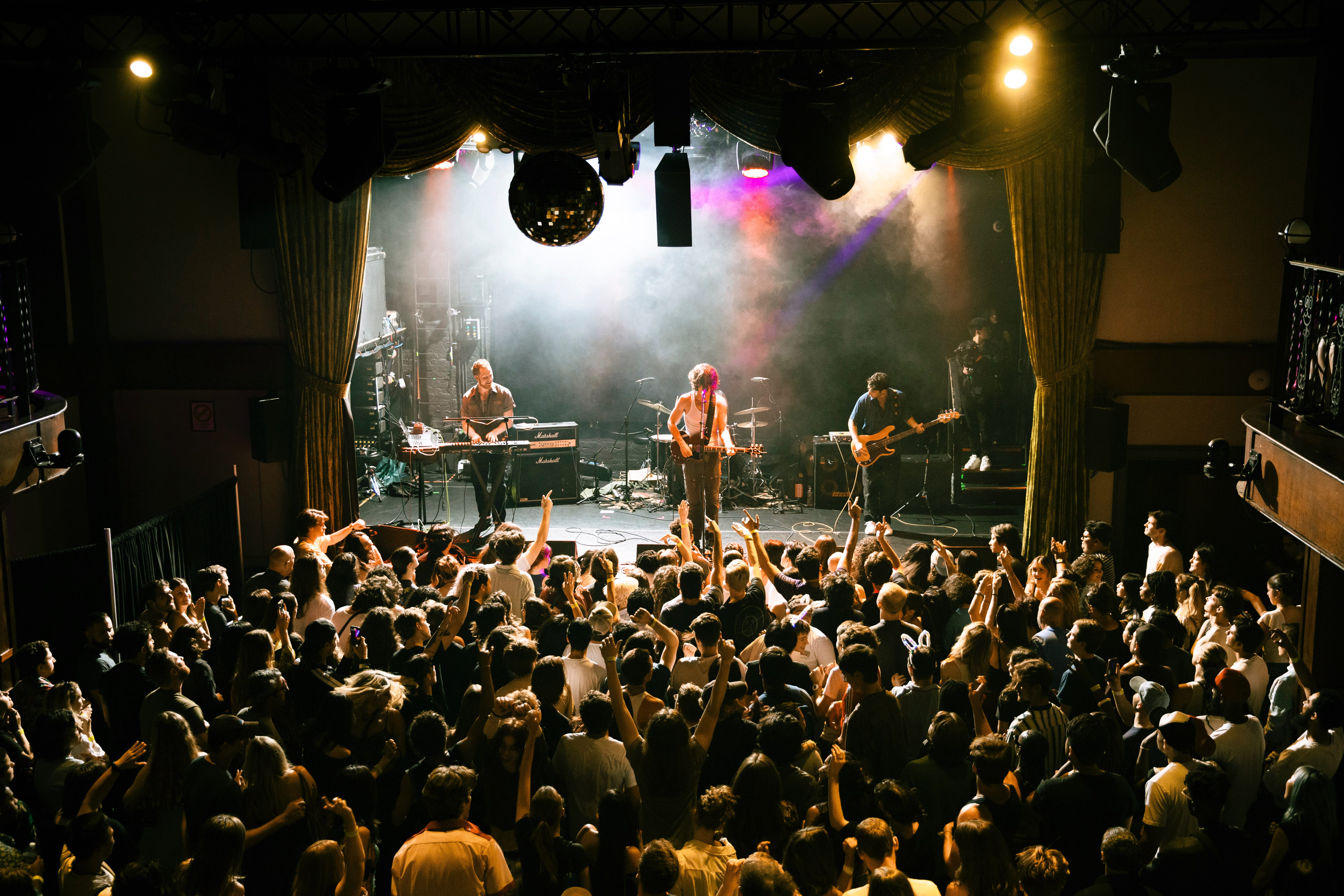
The problem is not the city. The artists are still here; the buzz is still here. I felt it at the Bowery Ballroom in the summer of 2023 when The Telescreens and Sid Simons played for a sold-out room full of indie kids; when more lighters than phones came out in the dark. And, I felt it last weekend when 500 people packed into my gallery and flooded out onto Hester Street. The culture is not dead. But the ecosystem that used to sustain it is fracturing, and it’s proving difficult to maintain a creative dream in THE city for pursuing something of the sorts.
The Fracture
Downtown Manhattan in the 1970s and ‘80s (yes, I’m going there) ran on a parallel economy, not just a financial one. Midtown ran on money, while Downtown ran on social currency. Cool actually meant something then, and money alone couldn’t get you into every room like it can today.
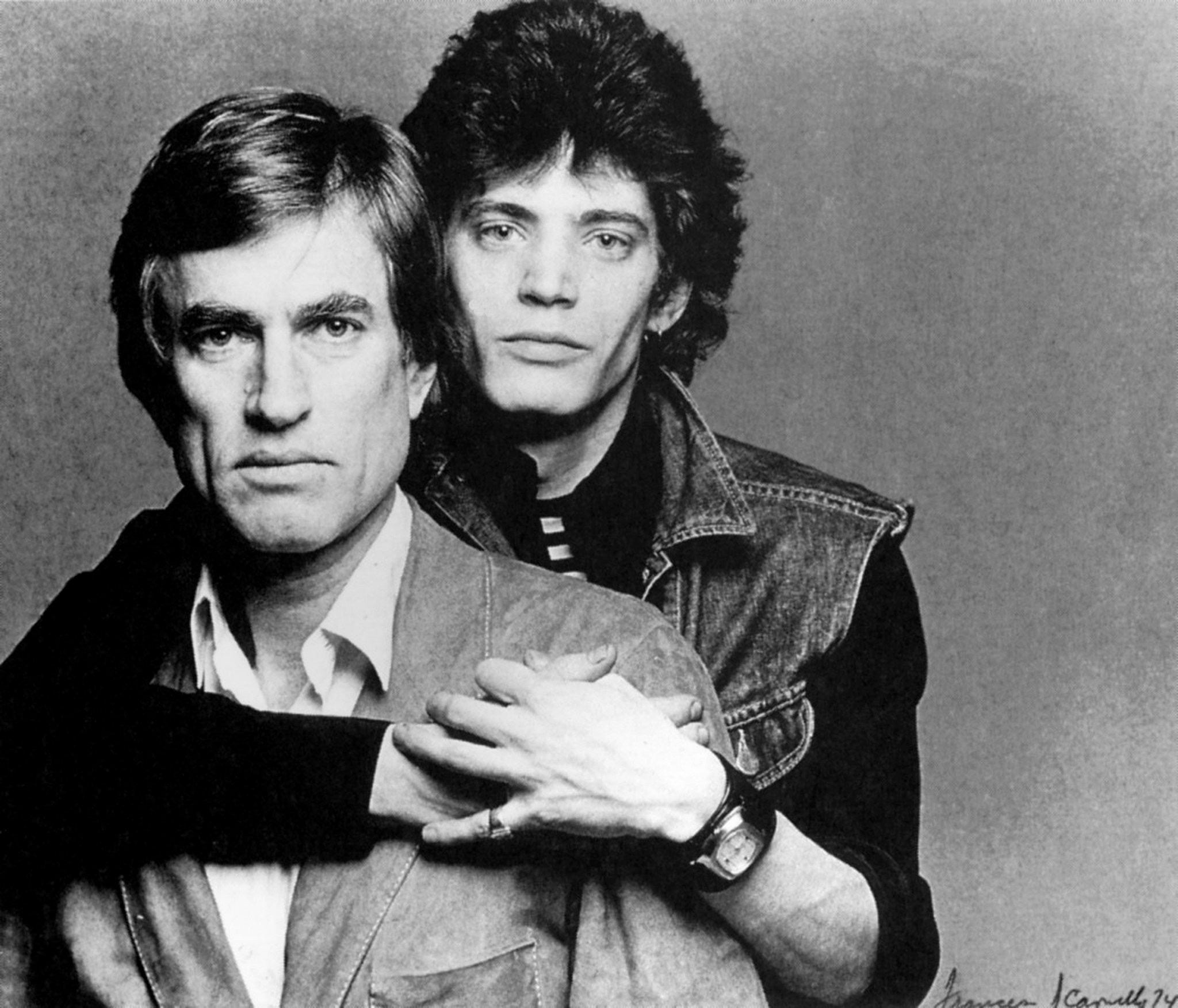
Take Sam Wagstaff. He was old money New York, a real blue blood. He met a young photographer from Queens named Robert Mapplethorpe in 1972, and what followed was one of the most consequential patron relationships in American art history. Wagstaff went through a personal transformation, from a conservative, uptown prep kid to a downtown regular, giving into the progressive lifestyle of the times. He bought Mapplethorpe a loft on Bond Street, a Hasselblad camera, and access to every room that mattered. In exchange, he got what money couldn’t manufacture: proximity to the real thing — the artist and the art. His story is the precipice of what I’m talking about.
That’s the part people forget: the right attitude was the true price of admission.
As his biographer Philip Gefter wrote in Wagstaff: Before and After Mapplethorpe, “Because [Wagstaff] was a patrician and knew very wealthy philanthropists, he could, by virtue of having a conversation with somebody, have them open a checkbook and buy ten photographs by this young artist named Robert Mapplethorpe.” The transaction moved in both directions. That was the point of the relationship.
This arrangement wasn’t even uniquely New York. In the early 1990s, John Galliano — already considered a generational talent by everyone who mattered in fashion — was living in a tiny Paris atelier, yet couldn’t even pay to put out a new collection or stage a show. He had the vision and he had the work; what he didn’t have was money or resources. The journalist at Condé Naste André Leon Talley publicly hailed him an “endangered species,” and in came Anna Wintour. Subsequently, a socialite named São Schlumberger lent her 18th century mansion. Galliano filled it with dead leaves and dry ice, secured the backing, staged the show, and within two years was appointed to Dior — becoming the first British designer ever to head a French haute couture house.
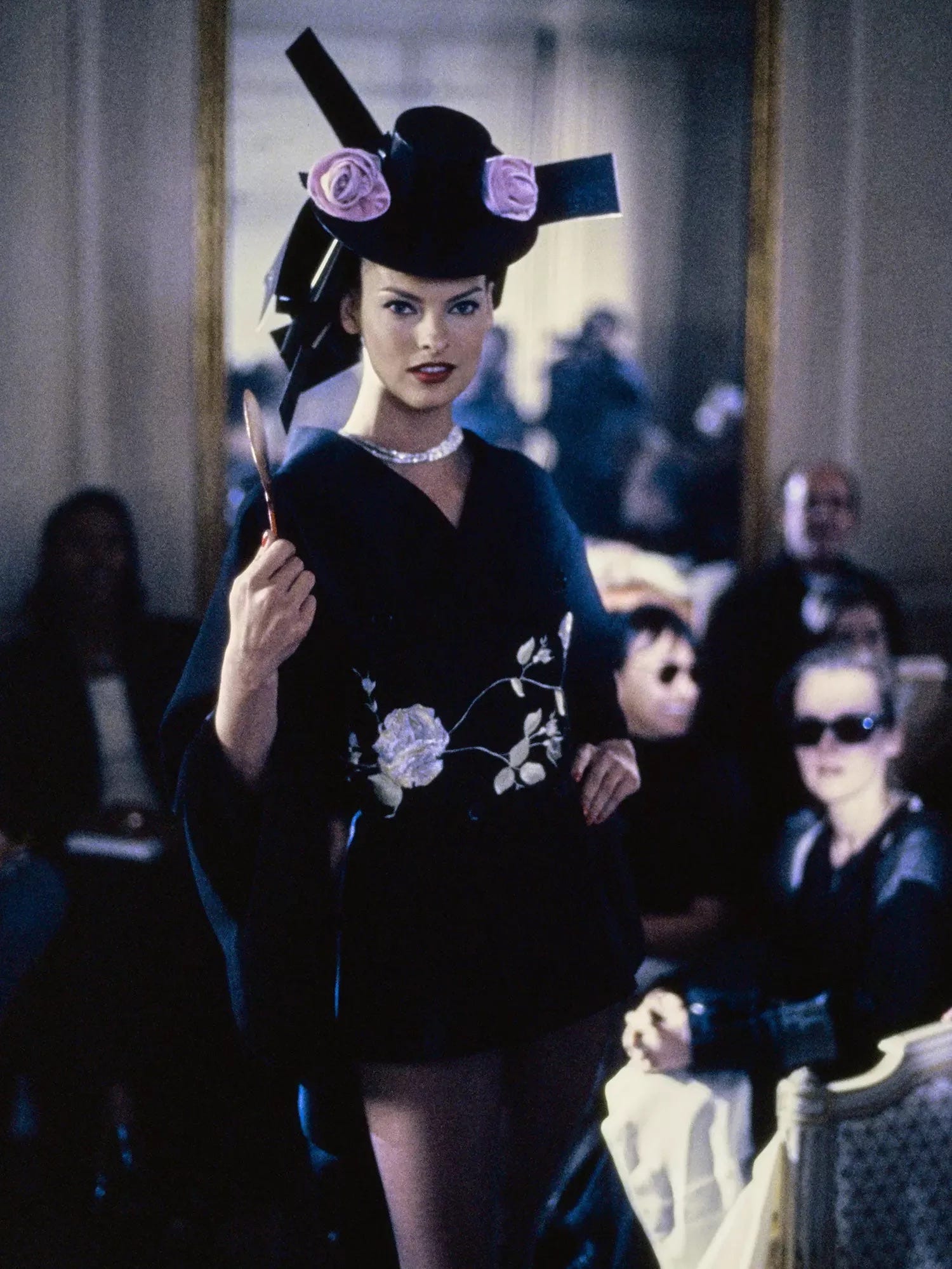
Remove any single person in that chain — Talley, Wintour, Schlumberger — and that version of Galliano likely never emerges. The talent was always there, but to flourish, it needed access, resources, people with vested interest. That’s where things differ, even today: in Europe, people value art and culture in a way that feels integral to their history and the function of their society; in America the conversation often turns to money, not taste.
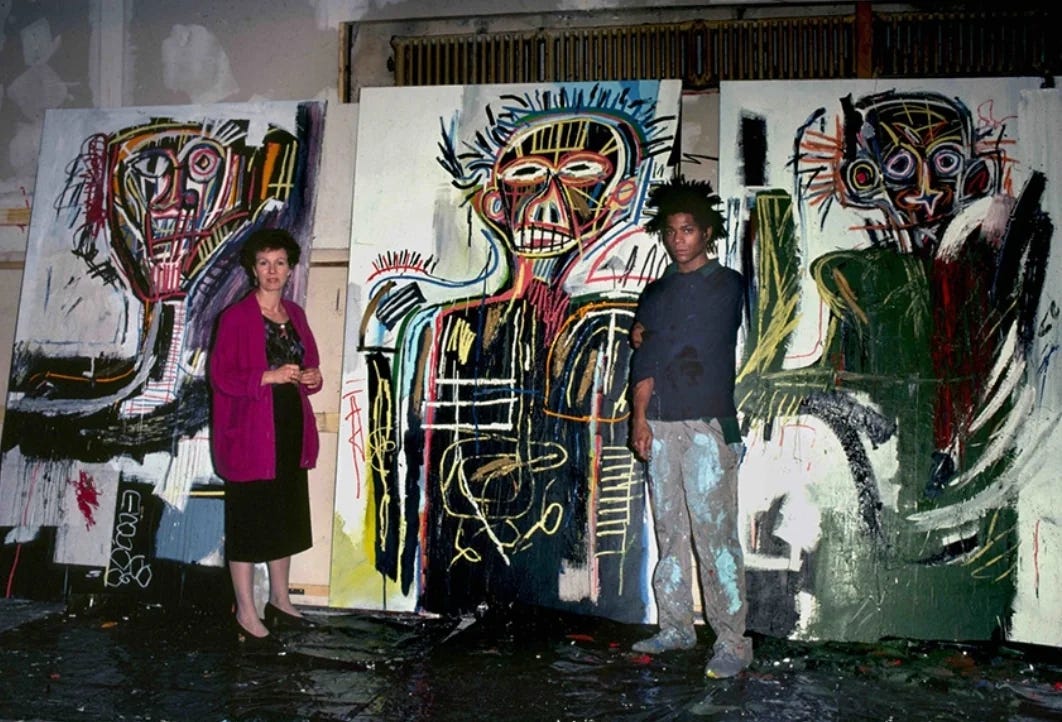
Back stateside, Basquiat had his own ecosystem operating in the same mold. Annina Nosei gave him the basement of her SoHo gallery as a studio; Gagosian had him living in his house in LA before a solo show. These patrons weren’t writing checks from a distance, they embedded themselves in the life of the artist because that was the only way to acquire the thing they actually wanted: a seat at the table and access to the places where the culture was being made.
And Basquiat, for his part, was notorious for selling directly out of his studio to anyone who showed up with cash and the right attitude. That’s the part people forget: the right attitude was the true price of admission. Again, money alone wasn’t enough. You had to show up, to be part of the world.
Tipping Point
In the early 1980s, Frank DiGiacomo wrote in Vanity Fair that it was, “An age of neon excess in art and commerce in Lower Manhattan.” And The Odeon was where it was all negotiated. Keith McNally and then wife, Lynn Wagenknecht, opened the bistro in Tribeca in 1980 in a neighborhood so dark the Twin Towers provided most of the light. It “Filled up with local artists and writers first, and then quickly attracted uptown types who hoped to hobnob with the young glitterati,” DiGiacomo wrote.
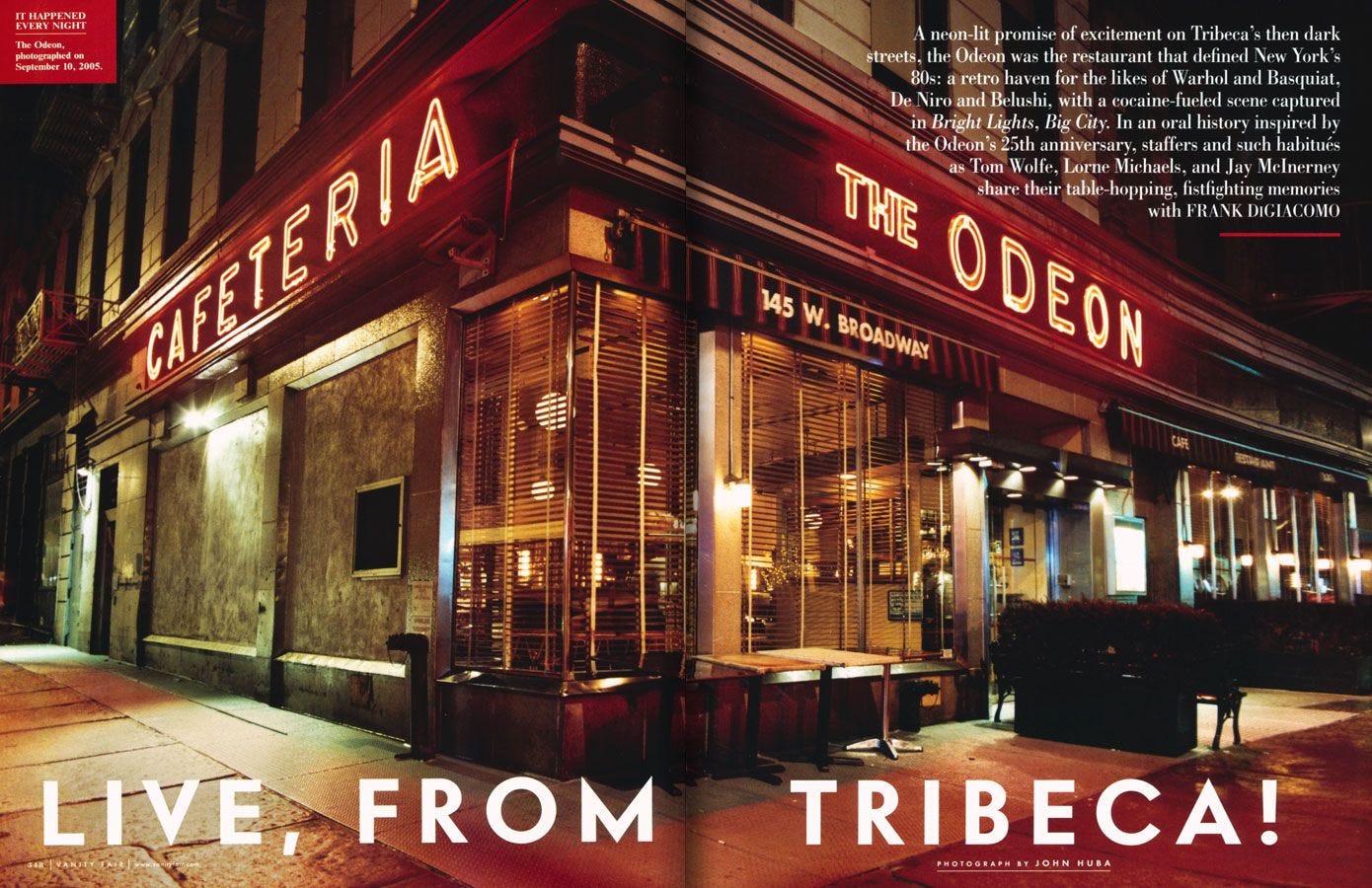
That’s how it always worked: it started with the creatives, then everyone else followed. McNally said it himself, writing in the same VF piece that The Odeon was meant to be, “A place where businessmen and starving artists could come and be together.” As Tom Wolfe, also quoted in the piece, put it, “Everyone who wanted to be where things were happening, as the phrase goes, was coming in.”
This was a space to facilitate the transaction, but spaces like that don’t exist anymore. That’s what’s broken.
You don’t need to buy a Lorenzo Amos to prove you have taste when you can repost it on Instagram for free.
Writer Jerry Saltz watched it break in real time. “For nearly ten years, starting in the late ‘90s,” Saltz wrote in Artnet Magazine, “Art and money had sex in public. Lots of it. And really publicly. Art became news. Prices were equated with artistic value. The highest sellers were seen as the best artists. Galleries got bigger, then became multinational.” The creative economy became a financial one and the intimate ecosystem of old Downtown went with it.
Then came the rise and fall of Vice. Disney, TPG, George Soros and the Murdoch family poured $1.6 billion into a company built on the promise of cultural access. Vice peaked at a $5.7 billion valuation in 2017 and filed for bankruptcy in 2023. The suits wanted what the money men of the 80s always wanted: access to culture and the feeling of cool. The difference is that, in 1982, buying that access required actually funding the culture that was producing it, not just participating in its upside.
What finished the job was social media (and I’m not even a hater of social media; it’s good for so many things). However, before, the scene had to be physically attended. You couldn’t perform “downtown” from your phone. Showing up was the point — it was the cost of admission and the product itself. Now, the Goldman banker can signal some semblance of cultural fluency without ever setting foot below 14th street. He listens to the Throwing Fits podcast, attends the right restaurants (the ones he sees on TikTok), and gets the same dopamine hit New Yorkers walking into The Odeon in 1982 got. He does it all without actually finding something, loving something, and most importantly, investing in something. He isn’t adjacent to anything. He’s watching a curated simulation of a scene while the scene itself quietly starves.
When that physical obligation dissolved, so too did the economic relationship that sustained everything around it. You don’t need to buy a Lorenzo Amos to prove you have taste when you can repost it on Instagram for free. You don’t need to fund the gallery to get the invite — the invite is now just a story on someone’s feed.
Rebuilding
That brings us to today. An inflection point for me, personally.
My business partner Lane Kimbro and I opened PRIV.Y, a gallery and production company on Hester Street, in 2024. Lane was still at Goldman Sachs at the time. I’d been working in fashion and making things, but I’d also been to business school. I understood that money talked, and I never believed in the artist-as-purist mythology. Rent isn’t cheap. Food isn’t cheap. You can’t live in the Chelsea Hotel on napkin sketches anymore, and pretending otherwise is a fantasy that only people who’ve never had to make rent can afford.
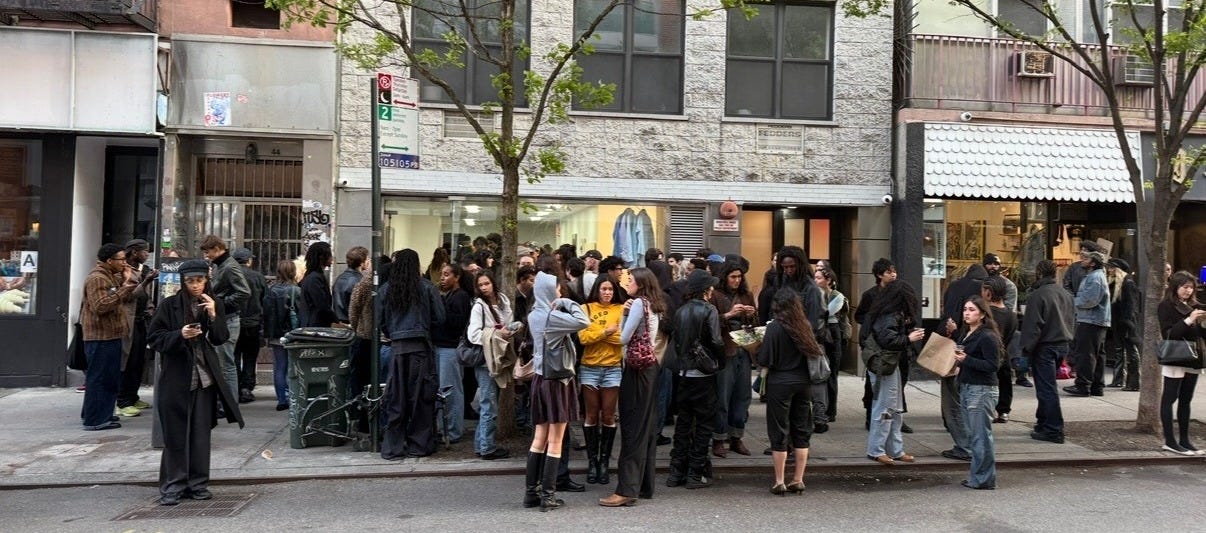
Last week, we had 500 people at a gallery opening and not a single sale; not even an inquiry, This happens more often than not. Luckily, the production company runs at a profit, and that profit is what keeps the gallery lights on. We subsidize the culture ourselves because the alternative is a New York where the galleries close and the artists leave. But I refuse to believe that it has to be this way.
And yet, there is a specific and modern absurdity to 500 people gathering for the sake of art and not a single person reaching for their wallet. This is something Lane and I think about all the time. We want to continue to create a space for artists to show their work and to bring like-minded people together, but the unfortunate fact of the matter is that most of our community isn’t buying art; they can’t afford to. And there’s the disconnect once again.
So, how do we find longevity here?
What this city needs, and honestly, what every city with a financial center and a creative class needs, is a new generation of artist patrons. Young collectors. Money people willing to walk into a space on Hester Street or in Bushwick and say: I want to be part of this. Not through my phone, or an algorithm, but physically. In the room. With skin in the game.
The 32-year-old banker making $600,000+ a year has no idea where to find culture beyond his phone because nobody has made the case to him that what’s actually missing from his life is that painting on his wall, which he bought from someone he actually met, in a room he walked into, in a neighborhood he sought out. That act of collecting, of patronizing, of putting real money behind something uncertain and alive and not yet validated by an auction house or an algorithm is the only way artists will be able to survive in a city like this.
The work is still being made. The artists are still here, trust me I’ve seen it, I’ve felt it. It just needs more people who are willing to invest in what they’re already showing up for.
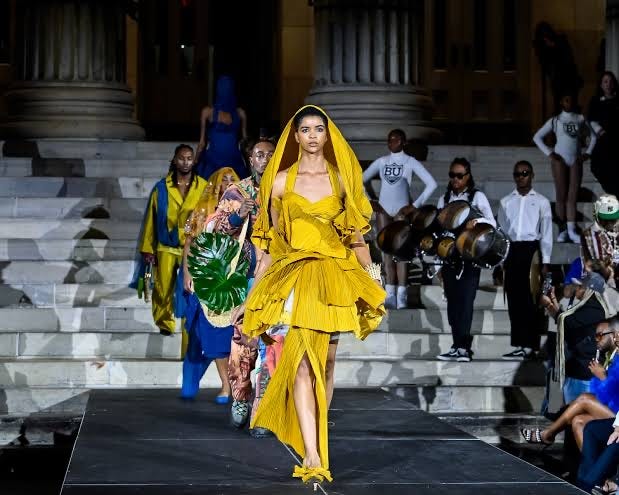
People like KidSuper. At his “The People’s Runway,” he fooled the CFDA and all the press outlets into thinking he was showing a new collection during NYFW, when in fact, he had simply funded a group of young designers to show their collections on a massive stage in front of the fashion industry. Or Jake Sacks’ 3rd Space dinner party series, where he brings creatives, entrepreneurs, and big thinkers together in one room to eat, drink wine, and share ideas. Or Serving The People, a non-profit organization founded by Lucien Smith and run by myself and Maya Ribeiro. We host weekly in-person meetings in New York, LA, London, Paris, Milan, and Phoenix, discuss our practice, ask for advice, host shows and lectures, and provide support and infrastructure to a large group of artists across all different ages and all different mediums.
There are people and communities, actually finding success. That should give us all hope.
 | A guest post by
|
Incredibly said!!! Loved this piece!!